Julie Poly
проєкти
Temptress (”Грішниця”) | Art Magazine | 2021-current
The Stammering Circle | виставка | Львів | 2025
Bad Connection | 2024
The exhibition Cultural Fabric | Берлін, Fotografishka | 2023
SOUNDSCAPE 4:59 | 2023
4:59 | соло виставка | Осло, Fotogalleriet | 2023
FUTURESPECTIVE | Vogue UA | 2021
Арт-зін «Грішниця» (UKRAINE ONLY) | 2021
Send Nudes | preview | 2020-2021
Укрзалізниця | 2017-2020
«УЗ» | про проєкт | 2017-2019
«УЗ» | книга | 2020
«УЗ» | виставка | Київ-Пасажирський | 2018
«Киць-зась-мяу» | гральні карти | 2015
«Космолот» | лімітована колода карт онлайн-гра | 2019
«Мій скарб» | робота для вітрини ЦУМ | 2019
«Дітлахи» | благодійний проєкт для дитячого будинку | 2016
едіторіали
NUMÉRO BERLIN | 2021
ГРІШНИЦЯ | 2021
L'Officiel Ukraine | 2021
DAZED BEAUTY | 2020
ACHTUNG | 2020
«Еротика» | Vogue Ukraine | 2017
ЛУНА | Vogue Ukraine | 2017
Жозефін де ла Бом | Jalouse Magazine | 2017
Harper’s Bazaar Ukraine | 2017
Aleï | 2017
«Дітлахи» | Vogue Ukraine | 2016
інфо
Біографія та Контакти
CV
Медіа
Links

︎ ︎
The Stammering Circle
The Stammering Circle, a distributed exhibition on view at locations throughout Lviv, addresses disruption as dysfluency—a “stammering” that makes room for the pause essential to the exhibition of art in the context of war. A noisy business, war is voluminous, invasive, and serially destructive. It intercepts the continuum of time, it breaks our understanding of cause and effect, and it violently occupies the everyday and challenges the basic tenets of existence.
Ukrzaliznytsia—Ukraine’s national rail system—is the backbone for the country—it essential to the war effort, crucial to moving people, weapons, goods and supplies, as well as providing a diplomatic avenue and an economic lifeline.
Ukrzaliznytsia is so vast it has long been referred to as “a country within a country.” There are 230,000 employees, from those on the trains themselves (locomotive drivers, their assistants, train attendants, conductors) to everyone at the station (stationmasters, security officers, ticket sellers, luggage-storage clerks, cleaners) and then everyone behind the scenes (track inspectors, car inspectors, signal maintainers, structural engineers, electricians, electronic-equipment engineers, locomotive electricians, greasers, train dispatchers, railcar loaders, railcar mechanics, switchmen, track workers and depot attendants, without whom passenger toilets would back up). Then there are depot and workshop jobs (hostlers, repairmen, carpenters and factory workers, to name a few). Ukrzaliznytsia does its own laundry, it has its own glass factory, a carriage factory, a steel-rail rolling factory and another factory that cuts the rails to size. There are railway schools for children, vocational schools, summer camps, sanitariums and hospitals. The 15,000 miles of tracks are government-run and controlled from the center, including stations, depots and factories .… In a partnership between
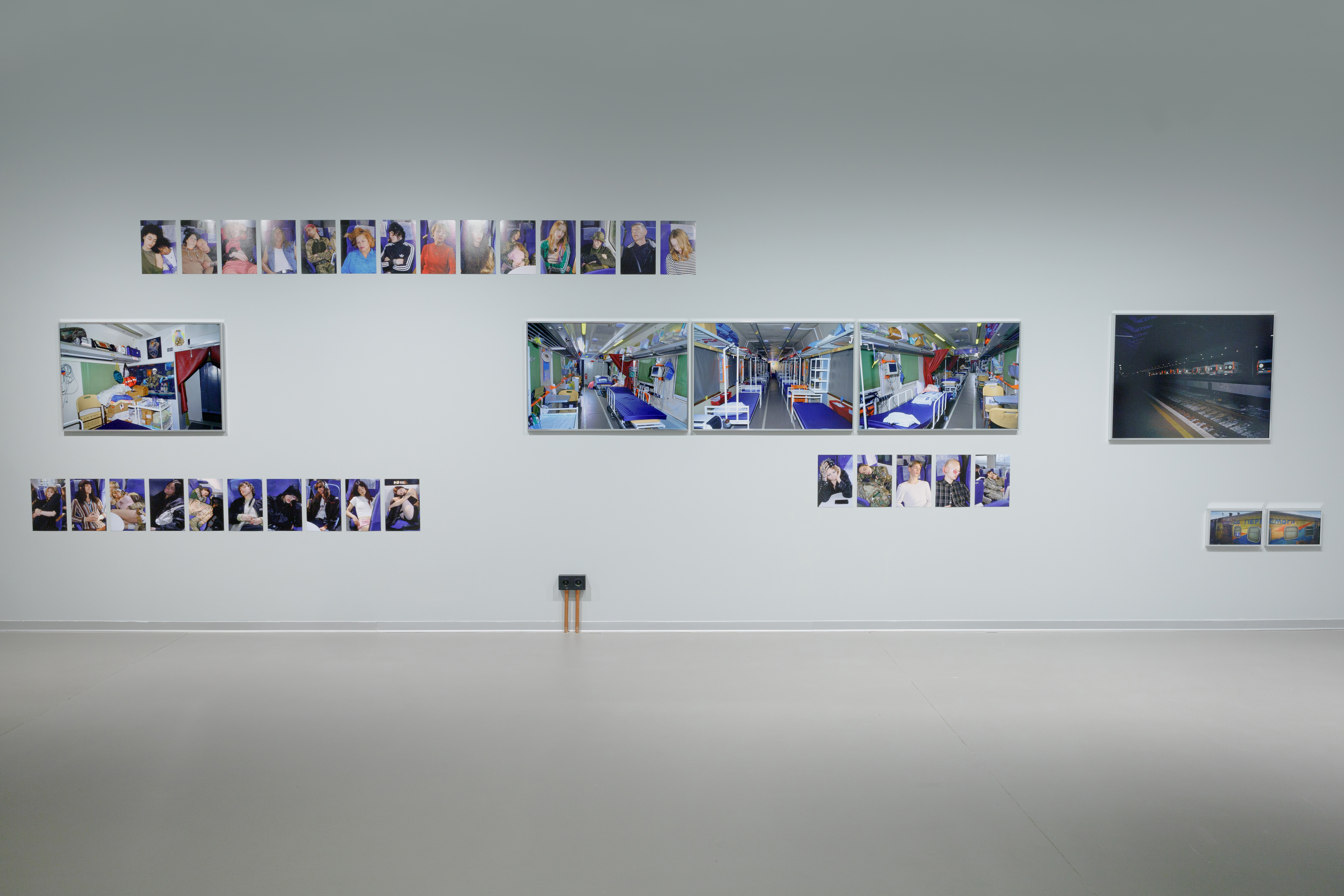
Ukrzaliznytsia and Doctors Without Borders, two trains had been retrofitted for medical use, one as a mobile intensive-care unit. Doors had been widened for stretchers and compartments fitted with equipment, staffed by doctors and Ukrzaliznytsia attendants in shifts. The train’s routes aren’t publicized because of their proximity to the frontline.
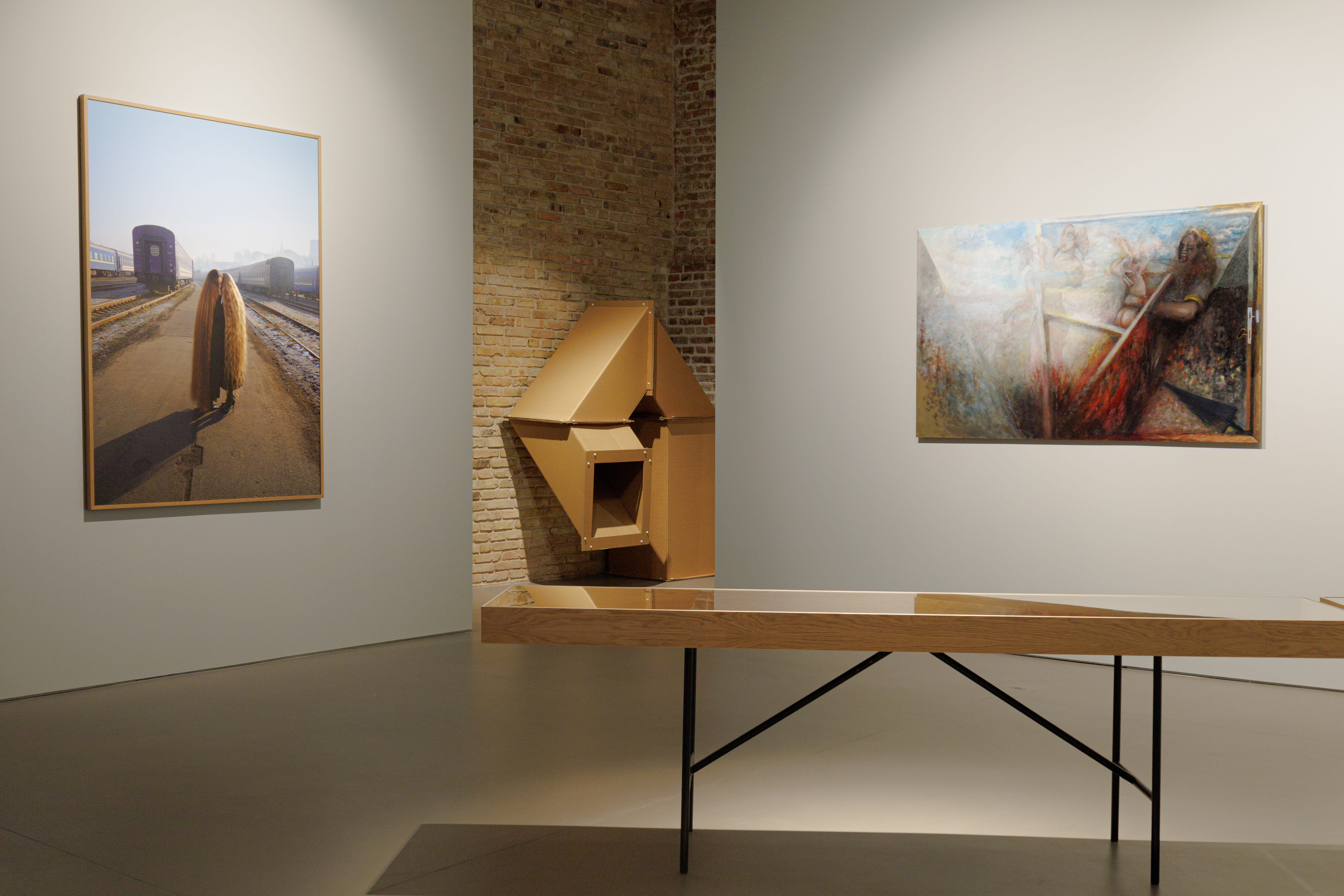
Julie Poly (Yuliia Polyashchenko) produced the series Ukrzaliznytsia between 2017–20 after graduating from Kharkiv State Academy of Railway Transport and gaining extensive experience as a train conductor along Ukraine’s national railways (Ukrzaliznytsia). The series arose from her desire to capture the essence of traveling across the country before full modernization of the network. At the time, Poly described the atmosphere aboard the trains as “erotic” in that the “notions of privacy and personal boundaries arrived as dim as the train light. Poly’s original series was exhibited in 2018 inside the Kyiv Central Railway Station.
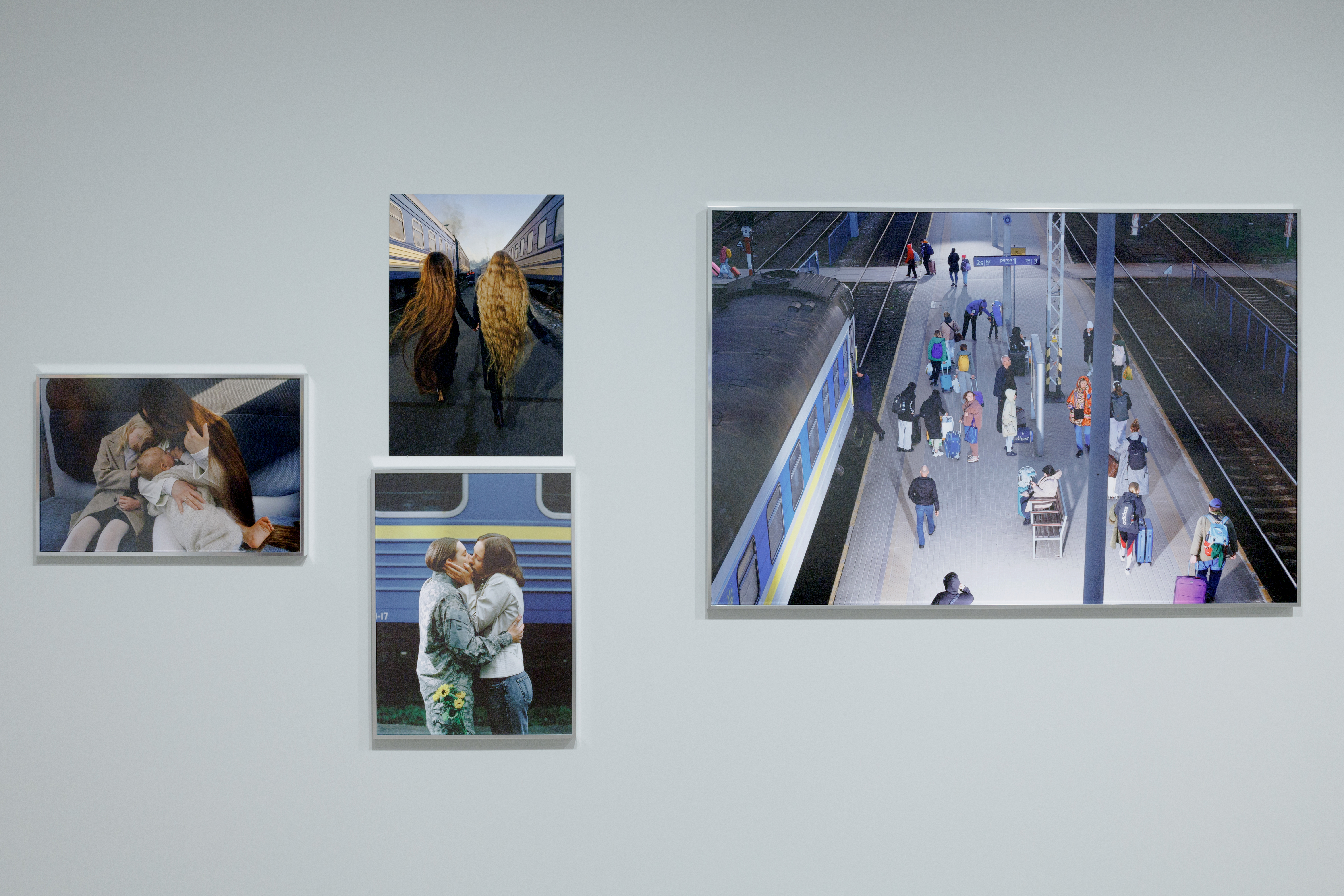
For The Stammering Circle, Julie Poly returns once again to Ukrzaliznytsia—this time in the winter months of early 2025, nearly three years into an ruthless war that has shifted the borders of the original network of the state rail system. Her engagement this time is graver—the Ukrainian railway has transformed into a conduit of forced relocation, displacement, emergency medical transport; into a channel of involuntary movement of individuals, families, personal property, pets, forced by conflict, violence, and ecological disasters to migrate. Poly’s images resonate between the gloomy and the ill-fated to the playful and more hopeful, informed throughout by contingency and collective trauma.
Photo credits: Kostiantyn Hlyvlias